What each engine keeps on its own
- Algorithm
- Decay
- Pre-delay
- Damping
- Wet and dry
- Low and high cut
- Octave shifter
- Its own bypass
Platinum Series · Two engines
Stereo reverbPlatinum Series
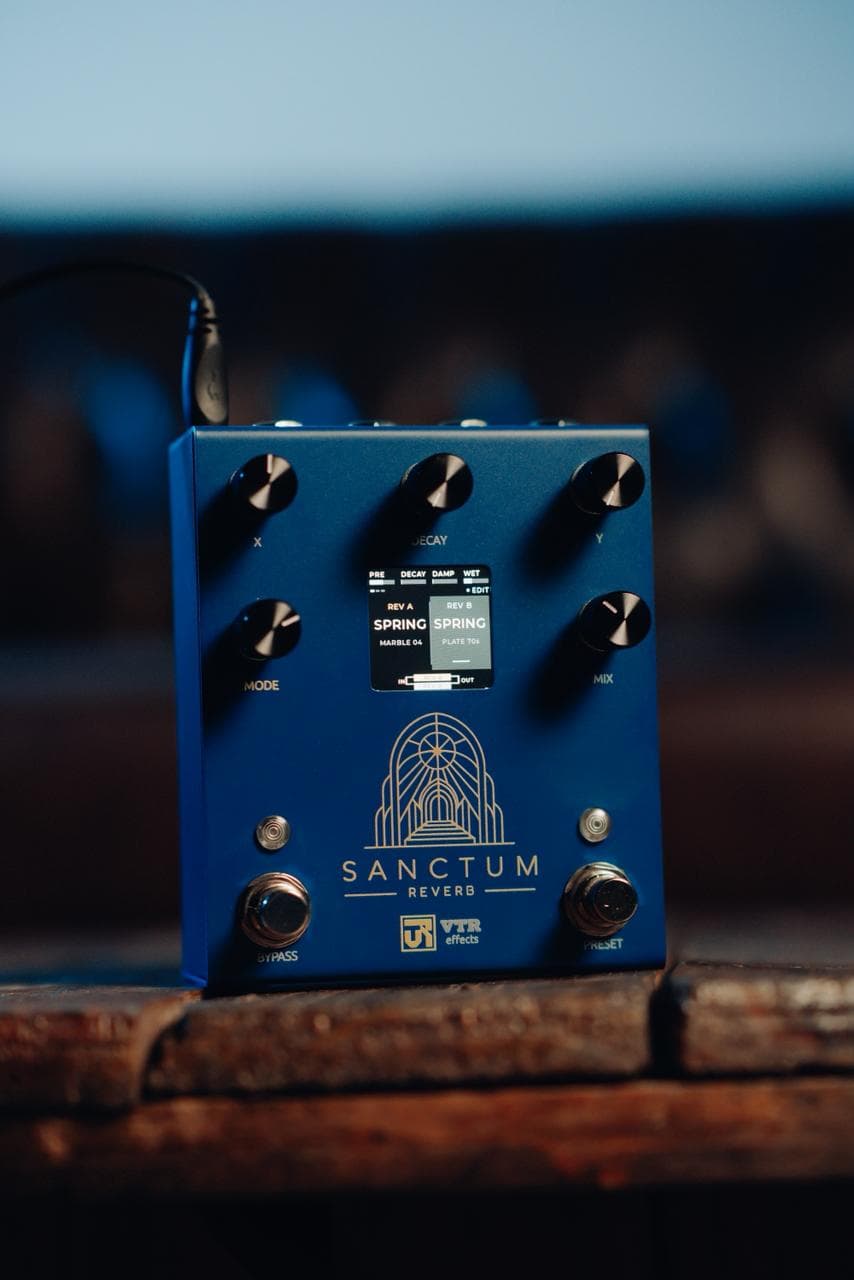
Two reverb engines running at once — in series or in parallel — each with its own algorithm, its own time and its own tone. All the DSP power of the Platinum Series applied to the algorithms that made the Kailani.

Pre-launch
The Sanctum is not on sale yet. Join the WhatsApp group to get the launch date, the price and the first units first-hand.
Join the waitlistWhere it comes from
The Sanctum inherits the algorithms that made the Kailani and runs them on a platform that doesn't have to hold back: the same Platinum Series DSP, with memory and processing to spare. Same sonic signature, without the limits that kept it short — and twice over, because none of it is spent on a single engine.

Two engines, two paths
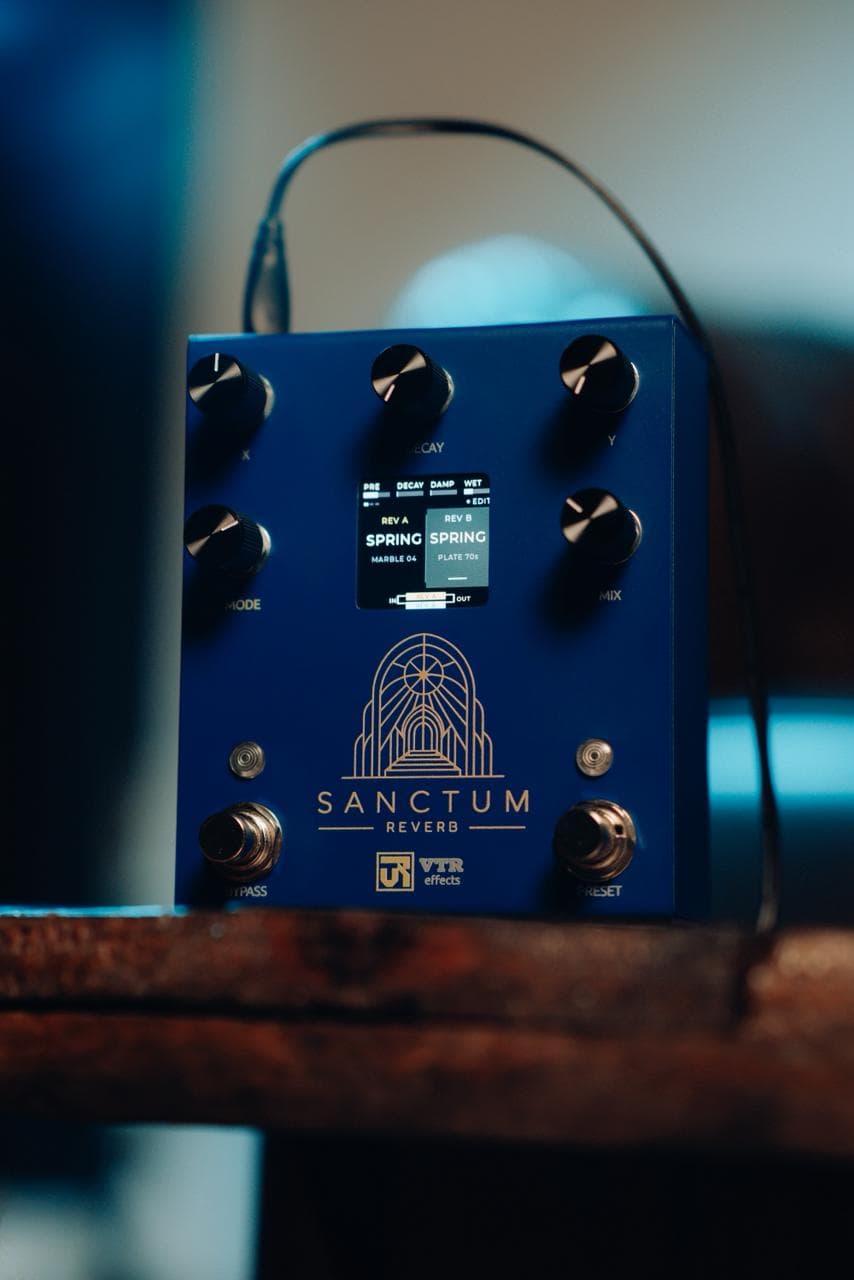
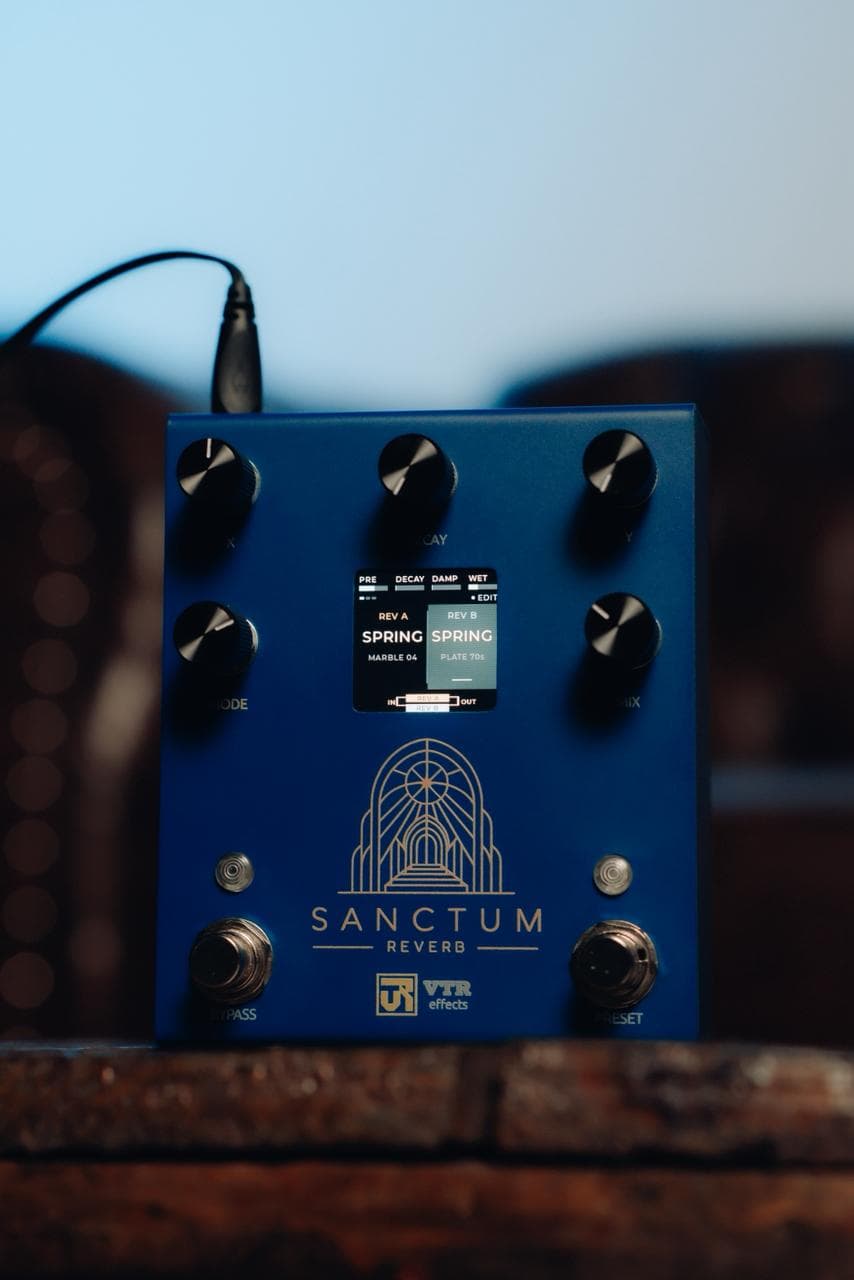
REV A and REV B are two complete reverbs inside the same pedal. The MODE knob decides how they meet, and the display shows the signal path while you play.
The first engine's tail becomes the second one's input: a small spring feeding a cathedral, one reverb happening inside another. That is how you reach depths no single algorithm gets to.
When you change presets the tail that was sounding is not cut off: it keeps decaying for the time it had left while the new algorithm already responds to what you play. The direct signal never drops with it.
Features
This isn't a reverb with more options. It's a pedal with two reverbs, and everything here follows from that.

01 / ENGINES
The screen shows both engines at once — algorithm, preset and signal path — so you know what you're hearing without entering any menu.

02 / SPILLOVER
The previous tail is captured and keeps decaying while the new preset takes over the input. The processing cost is constant — any pair of algorithms, both engines together.

03 / CONTROL
X and Y have no fixed function: each algorithm redefines what they do, and the display tells you which. Switch algorithms and both land on the value that makes that sound work.
Each slot stores both engines and the routing, not just one algorithm.
Low cut and high cut act on the tail only; the dry signal is never filtered.
Each engine has its own, so A and B can point at different octaves.
L/R input and output processed in real stereo at 48 kHz.
Program Change and CC for both engines; USB-C for firmware and presets.
The tail keeps decaying after you switch off, instead of being cut.
Algorithms
Open each one to understand the texture. Any pair can run together, in series or in parallel.
Huge tail, long pre-delay and widely spaced reflections. The algorithm that gains the most in series, fed by a smaller reverb.
Connections
Main 1/4" TS input. Mono signal by default.
Second input for a stereo source — both engines process L and R separately.
Main output. On its own, it delivers both engines summed to mono.
Right output for stereo amplification or two distinct tracks.
Program Change and CC for both engines, the routing and the presets.
Passes MIDI on to the next device in the chain.
Firmware updates, preset backup and the VTR Editor.
9V DC center negative. Isolated supply recommended.

Technical specifications
The VTR flagship
12 algorithms per engine · series or parallel · real spillover · true stereo · MIDI and USB-C.