
Timbre
Dicas para Tirar o Melhor Som dos Seus Pedais
Obter o som perfeito com seus pedais requer atenção a detalhes e ajustes finos, que podem transformar completamente sua experiência musical. Pedais são ferramentas poderosas para criar texturas e nuances, mas para maximizar seu potencial, é fundamental entender como configurá-los corretamente.
1. A Ordem dos Pedais Importa
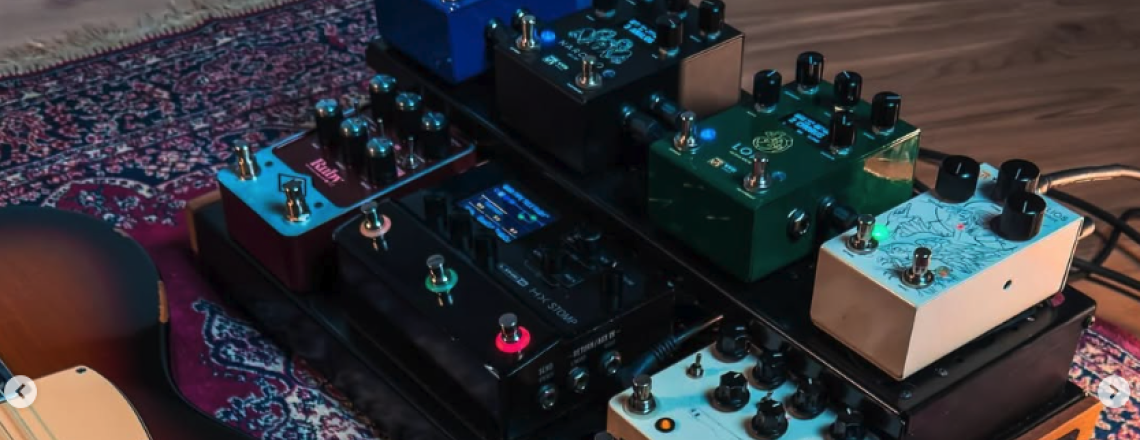
Uma das primeiras coisas a considerar é a ordem em que você conecta os pedais no seu pedalboard. Pedais de drive, como overdrive e distorção, geralmente devem ser colocados no início da cadeia de sinal. Pedais de modulação, como chorus e phaser, funcionam melhor no meio da cadeia. Efeitos como reverb e delay devem ser os últimos, para garantir que os outros pedais não modifiquem a reverberação ou os ecos.
Exemplo de uma cadeia clássica: afinador > overdrive > distorção > modulação (chorus, phaser) > delay > reverb. Essa ordem não é uma regra absoluta, e você pode experimentar para encontrar a sonoridade que mais agrada ao seu estilo de música.
2. Ajuste Preciso dos Controles
Entender os controles de cada pedal é essencial. Pedais de overdrive e distorção, por exemplo, possuem controles de ganho, que definem o quanto de saturação será aplicada ao som. Já em pedais de modulação, é comum encontrar controles como "rate" (taxa) e "depth" (profundidade), que ajustam a intensidade e a velocidade do efeito. Ajustar esses parâmetros com precisão, em conjunto com o volume geral, ajuda a evitar distorções indesejadas e cria uma mixagem equilibrada.
3. Use uma Fonte de Alimentação de Qualidade
Pedais de efeito são sensíveis à qualidade da energia elétrica que os alimenta. Fontes de alimentação ruins podem gerar ruídos e interferências que comprometem a qualidade do som. O uso de fontes isoladas ou com proteção contra interferências garante que o som permaneça limpo, sem adicionar chiados ou ruídos indesejados.
4. Manutenção e Limpeza São Essenciais
Manter os pedais em boas condições é crucial para obter o melhor desempenho. Limpe regularmente os jacks de entrada e saída, e certifique-se de que os cabos utilizados são de boa qualidade e estão funcionando corretamente. Pequenos problemas, como oxidação nos conectores, podem introduzir ruídos e comprometer a qualidade do som.
5. Explore as Configurações de Nível e Volume
O ajuste de volume entre pedais é importante para evitar picos ou quedas de volume ao alternar entre os efeitos. Certifique-se de que os níveis de saída de cada pedal estão balanceados com o sinal da guitarra, para que a transição entre os efeitos seja suave e sem interrupções bruscas na dinâmica.
6. Teste e Experimente
Embora existam recomendações gerais sobre como usar os pedais, o melhor conselho é experimentar. Cada pedal pode reagir de forma diferente dependendo do seu instrumento, estilo de música e até mesmo do amplificador utilizado. Experimente diversas combinações e ajustes até encontrar o som que mais se alinha com a sua identidade musical.
Conclusão
Tirar o melhor som dos seus pedais não é apenas uma questão de ligá-los e começar a tocar. Compreender como organizá-los, ajustar os controles e cuidar da manutenção faz toda a diferença. Ao seguir essas dicas, você pode maximizar o potencial dos seus pedais e levar sua performance a um novo nível.
Autor: VTR Effects


